Friday, July 30, 2010

what i wore: lucha libre

Photobucket

when we told pati, the housekeeper at la casa d'escritor in mexico city, that we were going on a date to the lucha libre, she exclaimed: "wearing THAT?!" i was wearing what i normally wear on a nice summer day; a simple red knee-length dress with white piping, and comfortable sandals. no no no, she insisted. i should wear a t-shirt and jeans.

ha! me, in a t-shirt and jeans. i thought...

why not.

for those of you who know me in person or have seen what outfits i have posted online... well, i am hardly a t-shirt and jeans kind of person. in fact, i do not and have not owned jeans in a good three or four years now. but my relationship to denim and pants is a whole other story... i scrambled through simon's closet and dug out two of my favourite of his clothing. seriously doubting my ample hips would be able to squeeze into his already skin-tight jeans, i gave it a go anyway. pairing it with his awesome "SCREAMING FLAMING OHMYGAW EAGLE" t-shirt, as we love to call it, a gift from a stylish belgian friend, i found i looked, in fact, quite badass.

and here is some proof.

PhotobucketPhotobucket


Photobucket


Photobucket

Photobucket
photos by simon, edited by me.

honestly i've found many people's concerns about what i "should" and "should not" be wearing on the streets of one of the world's largest cities slightly exagerrated... but that said, i really did not end up spending much time in the city itself, and only went out by myself once. in fact, my experience with mexico city have really reminded me of people's reactions when i first moved to toronto: omg you can't ever go out by yourself/wearing that/in neighbourhood x/don't talk to strangers/etc. this is something i could really go on about at length but! another day, another time.

i have three days left in this wonderful country; tonight we are going to celebrate at los toros in colima, simon's favourite bar in the world. tomorrow, we are waking up early, packing a bus with food and friends, and celebrating our three year anniversary while playing in the waves of the pacific ocean. sunday, a goodbye party in mexico city. monday, we catch our flights back to québec city.

i know july has been slow here posting-wise, but believe you me i'll have LOTS to share with everyone in august, i promise.

Photobucket

Friday, July 16, 2010

self-portraits: characters/decay

the "artist" at work

a bad habit of mine i've been trying to change is actually sharing some of the thousands of photos i take. i still have ones from last fall i took with the explicit goal of sharing them here and other places online... but here they are, still stagnating and find ways to get lost on my harddrive. but not this time.

on my last day in quebec city before i head to mexico via toronto, i decided to sneak into an apartment in the midst of renovations with some tools of my own: vintage dresses, lingerie, jewelry and of course my trusty pentax. the canon rebel doing the photo taking is courtesy of my wonderful friend ben. here are a handful of the results... i'll upload a few more to flickr later.

bride

bride

knobby knees

jewelry

peek

.

ode to tamil


also, off-topic: i'm looking for inspiration for a new layout. i still have a lot of love for the one susanna made for me, but i keep thinking back to why i made this blog in the first place... it's time for something more streamlined so you can easily see where else i post online, and an atmosphere that fosters more comments and discussions (i don't know about you guys, but i really dislike the way blogger handles comments and have been seriously considering moving to something more like wordpress). one of my main goals with this blog was to generate discussions and i often end up feeling like we don't get the chance to respond to one another individually.

aside from that aspect, aesthetically i'd really love something vintage inspired and classic, kind of like clevernettle, verhext, celine pinckers or katerina d'autremont. or perhaps i should just go the simple route and go for a nice header, something like cardboard sea has, or the wonderful nikki dekker. last but not least, what do you bloggers use for stat counter? i've been applying for guest blogging positions and things of the sort and the one i've been using for a month is not really cutting it. if anyone has any tips in this html department, suggestions of how to make or adapt your own layouts, your favourite blog layouts, etc, send me an email (juliacaron AT gmail DOT com) or leave a comment! sorry for all the technical boring discussions.

Monday, July 12, 2010

hiatus: on the road

on the road

as you may have noticed, i have been away from the internet for the past little while and will have sporadic access for another week or two. i miss you guys, but it's been a good break. the more time i spend away from the internet, the more i think about what i love about social media and, let's be honest, what i hate about it. remembering what is so great about dis/re/connecting...

but to be brief: i've been having some really amazing experiences here in mexico and i can't wait to write about them and share them with family and friends. i've been listening to (and trying to understand) a lot of spanish, learning how to use an SLR, taking many rolls of film, and traveling all over the place with strangers, lovers, and best friends. writing, thinking, singing, and laughing. i lost my moleskin in estacion de catorze, sadly, but i'm telling myself it is probably the world's way of telling me i may need a fresh start. july has been all about renewal.

to tide you over until i provide you with some more cultural criticism and fashion discussions, here is a mix i made for our nine day road trip through distrio federal, san luis potosi, queretaro, and veracruz. it starts off dancy and ends mellow and slow, with a lot of simon's favourites scattered throughout (i thought i should cater to his tastes seeing as he did all of the driving over the course of nine days). enjoy!

1. a sweet summer's night on hammer hill - jens lekman
2. down in mexico - the coasters
3. swimming - martha & the muffins
4. on vacation - the robot ate me
5. odessa - caribou
6. 16th & valencia, roxy music - devendra banhart
7. timebomb - beck
8. IRM - charlotte gainsbourg
9. desert eagle - ratatat
10. texico bitches - broken social scene
11. you're the one - the black keys
12. drivin' on 9 - the black keys
13. summer light - the cave singers
14. you're dead - richard laviolette
15. game shows - plants and animals
16. wet road - scout niblett
17. jesus loves me - cocorosie
18. chocolate jesus - tom waits

as always, if you like the songs, support the artists by buying their cds
at your local record store and going to their shows!

in the desert

Tuesday, June 29, 2010

violent thugs dressed in black: anarchists or cops? policing protesters clothing at the G20 protests

disclaimer: i wanted to publish this ASAP as i wrote it on my flight from toronto to mexico city, where i will be staying for the month of july. i am not planning to be online very often this month but feel that there are some very current critical issues that need to be addressed immediately. for these reasons i tried to keep this as brief and to the point as possible in order to publish it while my ideas are fresh.
  1. firstly, much of the clothing i focus on (bandanas, hankerchiefs, hoodies) and the colours (black and red) have very long and elaborate histories as well as numerous symbolic meanings in and outside of activist circles which i do not talk about here.
  2. secondly, i want to acknowledge that we could also address serious questions of how police officers not only target people based on what they are wearing, but also based on the colour of their skin. there are many reports that police explicitly targeted native women, young black men, and poc community organizers in their arrests and illegal detainments this weekend.
  3. finally, i want to acknowledge that many people directly affected by the issues G20 protesters were out in the streets to call attention to who decided against being out in the streets for their own physical and emotional well-being: immigrants, people on student visas, people of colour, trans people, people with disabilities, to name a few. these people are often disproportionately on the receiving end of police harassment, intimidation and violence in addition to being subjected to greater potential consequences (namely deportation, sexual violence, serious physical harm). i think it is important to note that while i do not go into detail about these issues in this article, we must acknowledge the important role these people play in our movement(s) and act in solidarity with them. thank you.

this past weekend, i was in toronto for the G20 Summit. i boarded a bus organized by the wonderful anarchist bookstore La Page Noire in québec city with fifty or so other people for the day long trip. i had amazing conversations with some really great people i hadn't had much of a chance to talk to before... our discussions ranged about everything from peaceful protests, why we opposed the G20, our civil rights, to drag kings.

upon signing up for the bus, i had not explicitly planned on attending protests or actions (for many reasons which have, unfortunately, been reinforced after the absolute travesties of justice that have occurred in the last week), and decided to see how i felt once i was in toronto. after the bus ride, a lot of thinking, and many conversations, though, i felt like i needed to be in the streets. in the end, i participated in relatively minor ways over the course of the weekend. this involved things such as yelling out a few chants on saturday around 5 pm near queen's park in response to the obscene police presence, asking questions to fellow protesters, attending the bike bloc on sunday, staying up to date with the alternative media coverage and sharing as much information as possible online. the highlight of my weekend was saturday night, when my friend morgan and i went to colour me dragg: silence this!, originally organized to celebrate resistance to censorship at pride this year. the events that took place on saturday changed that. it showcased incredible talent, and was an amazing, creative, positive night in solidarity with all the members of the queer community who were attacked by police and who were being detained in the makeshift detention centre (more about that awesome event in another post for another day).


but...this is a fashion blog, you are thinking. why is julia talking about the G20 protests? what could this possibly have to do with clothing? because, like i always say, fashion is political. some other readers might be thinking that it is incredibly frivolous and altogether irrelevant to talk about things like "fashion" when over 900 people were arrested for voicing their opposition to the G8/G20 and all that it represents. these events, and the questions about what people were wearing on the streets of toronto this weekend, are intrisically connected. what i really want to talk about here is the emphasis on the sartorial choices made by protesters, "average citizens," members of the press and police officers during this weekend's rampant opposition to the G20 summit in toronto and how it actively held a part in leading to such massive violations of human rights.

surprisingly, there is much to be said here. let's begin with some of the more obvious questions:
  • how does a protester dress? what does a protester "look like" and who decides what that is?
  • practicalities: what a protester should wear when participating in peaceful protests and rallies to protect themselves from targeting, harassment, tear gas, pepper spray, etc.
  • on the eve of the G20/G8 summits, with a $1.3 billion dollar security pricetag, what are police told to look for and who are they told to target to "ensure security" and "maintain the peace?"
  • policing and legislation around what people are allowed to wear on the streets of toronto as the G20 approached
  • massive confiscation of black clothing items: what are the assumptions being made about what black clothing means and represents?
  • how do police present themselves? their very own "costumes" and performances.
  • how to the police present themselves when acting as agent provocateurs and undercover/"plainclothes" officers?
those are just a few of the ways in which fashion constitutes a very political and important dynamic of what went on in the streets during the G20 protests and continuing resistance in the days following. the physical appearance of protesters and what they chose to wear was highly emphasized and was used as a way to target public hatred and to strike fear in the hearts of the consumers of the media. however, no one seems to be talking about these dynamics. the only things i have found about fashion and the G20 have been incredibly fluffy, insubstantial, and problematic articles published by the mainstream media.


"This easy-to-wash cotton/polyester ensemble will definitely be noticed by police. An optional bandana is made with polyester to protect from noxious fumes, but it also pampers the protestor with the luxury of satin." - from the Toronto Star

actually, they have been more than problematic, they are straight up nauseating. if you google "g20 fashion" - surprise surprise - we are once again exposed the sexism inherent in the institutions the G20 system upholds and represents. there are dozens of stories about what the G20 leader's WIVES wore on the "red carpet." was this a fucking hollywood premiere or was it a gathering of world leaders meeting to make important decisions that have a global impact?! you can even vote "hit" or "miss." yeah, judge the first ladies of the 20 wealthiest countries in the world based solely on what they wear. sounds right to me. at the very least at least they objectify female leaders like the President of Argentina and the Chancellor of Germany in addition to first ladies. and of course it gets worse.


how lawyers should dress in order to avoid being attacked by protesters for wearing suits. because we all know that was the main goal of protesters this weekend; to arbitrarily attack anyone wearing a suit.

sifting through all of this garbage, which is very clearly designed to distract people from the reasons WHY THE G20 IS HAPPENING IN THE FIRST PLACE and why 25,000 PEOPLE WERE OUT IN THE STREETS VOICING THEIR OPPOSITION, all i could do was laugh (well, that's a lie. all i could do was yell and gesticulate angrily and then put my head on morgan's shoulder and watch videos of maru) but then i started thinking about the ways in which "fashion" at the G20 was occurring in a very legislated and calculated way at the hands of police and the law.

in the article in which the photos of lawyers "in disguise" is taken from, many of the quotes illustrate just how pervasive the emphasis on how dangerous clothing can be.
...Mr. Wearing, who is counsel to the law firm Ormston List Frawley, will be dutifully adhering to the “Summit Planning Guide,” a one-page safety tip sheet being circulated by landlords in downtown Toronto.

“If you unexpectedly encounter demonstrators, you will be better treated if you are in jeans and a casual shirt than if you are in a business ‘power suit,” the guide advises.

“You’d be a fool if you were marching around looking like a suit,” Mr. Wearing said on Sunday, speaking through a BlackBerry he says he bought for safety ahead of the summit. “According to everything we read, those who are look like they are engaged in business are somehow the enemy.”

...“Now that we look like demonstrators, how do we convince the police not to pepper spray or tear-gas us?”

these statements perfectly illustrates the ideas propagated by the mainstream media that:
  1. "protester" might as well equal "violent terrorist"
  2. no protesters are lawyers, or any kind of respectable, powerful, suit-wearing folk
  3. aaaand last but definitely not least fucked up: that if you look like a protester, it's your own fault for getting tear-gassed or pepper sprayed. as mr. wearing ponders, how could you convince police not to pepper spray you simply based on your appearance? there is an inherent assumption that if one looks like a protester, one deserves violence and repression at the hands of the state. this statement inadvertently admits that there is explicit profiling going on on the part of police. this in and of itself is not enough: the police have aditionally been manipulating the media, the citizens of toronto, and protesters to try and excuse their rampant targetting, attempts at repression and brutality.
to prove just how truly backwards these notions are, the article concludes with this wonderful nugget of propaganda:
“You don’t challenge that type of event,” he said. “You use common sense and stay out of the way.”
unsurprisingly, the article does not discuss any of the hundreds of reasons why people are "challenging this type of event" and why people are refusing to "stay out of the way." it is serving to explicitly propagate stereotypes not only of what a protester looks like, but that if you "look like that" it is your own fault for being targeted, potentially arrested, and brutalized by police. we see this sort of logic at work in rape culture as well, demanding to know what women were wearing when they were raped and engaging in victim-blaming.

what is important for us to address here is the policing of our bodies based on what clothing we choose to wear when out on the streets during a protest. for me, these negotiations are particularly complicated in addition to being, in my opinion, totally fucked up. i don't change how i dress when deciding to attend a protest from my regular dressing habits. this basically means that i take to the streets in dresses. while i never run the risk of, say, being mistaken for an undercover cop, i do run other risks. i am often forced to negotiate spaces based on my presentation and appearance. i know some other protesters might read me as a bystander if i am not actively engaged, such as leading a chant (which i often do since my voice is very loudy and because i find it really fucking empowering), holding a placard, or being part of the organizations who organize the rallies/protests. from a logistic perspective, it is often harder for me to approach other more "obvious" looking protesters to ask for information, such as where events are happening if they have changed at the last minute, information about arrests, organizations, etc. at times, i have to prove myself as "one of them."


rally against the non-academic misconduct policy february 2008. photo by desiree kretschmar


student solidarity rally - in solidarity with trent's unions, oct 2007
photo by desiree krestchmar


student solidarity rally - in solidarity with trent's unions, oct 2007
photo by desiree krestchmar


national rally for choice, september 2008. photo by julia horel-o'brien

however, it is important to note that this appearance also affords me many privileges. i can often interact with police officers and get important information because i choose not to cover my face with a bandana, because i do not have a hairstyle which marks me as "alternative," because i don't have any facial piercings, and because i am a young "white"* woman. as long as i don't pump my fist in resistance, flaunt my black boots and show my hairy armpits (or otherwise mark myself as subversive) i can generally get away with a lot.


youth being held by police on yonge street on sunday, june 27th at around 3:30 pm. i tried to ask if they were okay, the man in this photo said no, police proceeded to yell at me, shove their hands in my face, obstruct my view of the dozen or so people being arrested, and refused to acknowledge any of my questions.

unfortunately, for the first time for me, this was not the case this weekend. sunday, i attended the bike bloc around the downtown in the early afternoon. afterwards, i visiting an alternative media coop. on my way back to my friend's place, i started asking questions/speaking to reporters wondering why a dozen or so activist-looking types were being cuffed and searched near yonge and gerrard. i was followed (for who knows how long, they refused to tell me) by three police officers in an unmarked civilian minivan while riding my bike down a quiet street. they yelled out their window at me, i stopped and was told i had broken several laws, they refused to clarify which laws other than not making a full stop at a stop sign on an empty street (except for me and said unmarked minivan which was following me), threatened with a $220 ticket, told repeatedly to shut up, that i was being aggressive, that i had no right to ask police officers questions, asked if i was a member of the black bloc or if i knew any, where i was from, what my job was, how long i was in toronto for, where i was staying, and so on and so forth.

i was generally made to feel incredibly intimidated, unsafe, and harassed for a good twenty minutes. as i walked away and they were no longer in sight, i burst into tears.

afterwards, i could not help but think that i had been "lucky." that i would have been treated differently if i had been wearing all black. if i had been wearing political buttons or badges on my clothing. if i had a bandanna around my neck. if they realized i was wearing red and black and that i do hold certain anarchist beliefs. if i were a person of colour. if i weren't informed about my rights. if one of those three cops did not sympathize with me. i could not help but think that i was lucky that i was not arbitrarily detained like many of the 900 other protesters over the weekend. lucky for not being detained or arrested for riding my bike down the street. how fucked up is that. i raise these questions because part of me wonders how much of what a protester looks like plays a part in them being harrassed by police, and how much of it is what actions they take?

every (seasoned) protestor has probably asked themselves these questions at one point or another. what should i be wearing so that i will not be a target for police questioning and other forms of aggression? why was i targeted? what should i be wearing so i can get away as easily as possible from the cops if they charge me, tear gas me, use their batons, shoot at me?
what allows me to walk the streets free of harassment and fear?
what makes me a target?

the most ironic thing about this is that the cops actively use these assumptions and stereotypes about what protesters look like when they act as agent provocateurs and undercover cops.

watch and enjoy:


so moving on to UNDERCOVER COPS. undercover cops actively reinforce these assumptions about what a "protester" looks like. wears black, bandanas, che guevara patches. is a man. this video actively shows that these reductive and simplified pre-conceived notions about what a protester looks like. they use these tactics to discredit protesters. as this video clearly illustrates, protesters are keen to these tactics and often spot these undercover cops and insist they leave. it is also interesting to note that many community activists, protesters and allies do similar things; wearing camouflage clothing or t-shirts emblazoned with the words "security" are a common sight in politicized community and is an interesting way of subverting and appropriating police clothing.


photo of a person smashing a store window who is suspected of being an agent provocateur

even two days after the g20 protests, there are serious questions being raised and reports about the number of undercover cops, agents provocateurs, and other manipulation tactics (why, with the exaggerated police presence on the streets, were two cop cars left unsupervised for such a long period of time?) used over the course of the preparations for the G20 Summit in toronto.

the criminalization and (literal!) policing of our appearances was completely overwhelming this weekend. i know i got away with a lot more this weekend (and by "got away with" i mean "escaped further harassment and intimidation for having participated in peaceful demonstrations because i am a pretty, dress-wearing, young, able bodied woman who doesn't fit their profile of what an activist looks like, save perhaps my black boots") because of my appearance. i wonder if any of the people who are still in the detention centre right now are wondering if they would still be in that detention centre if they had been wearing something else. i wouldn't be surprised.


photos by karol/decipherimages.com

to continue conversations about interactions with police, i briefly want to address my experiences with police officers in riot gear this weekend. as i mentioned earlier, on saturday afternoon at around 5 pm, after hearing about the police cars set on fire, my friend morgan and i hopped on our bikes to go see what was happening for ourselves. as we approached queen's park, the scene was terrifying; not because of smashed windows (i saw absolutely none) or flaming cars (there were none) but because of the sheer number of police officers. and not just police officers. riot cops. faceless, terrifying, robotic riot cops. i have been to more protests and rallies than i can count and i have never seen riot cops.

they absolutely terrified me.

i talked my feelings out to morgan to avoid panic; "they want us to be scared. i'm not doing anything wrong. they are supposed to intimidate me. i'm not scared. they are so fucking scared of us if they put this many cops on the street.

they know we have a reason to be angry. they know we have a reason, AND THE RIGHT, to be out in the streets, OUR streets. they know we are out here because we live in a world filled with injustice and that they play an enormous role in upholding the violent systems of oppression we are out here trying to challenge in any way we can."


photo by karol/decipherimages.com

these costumes and disguises worn by police are used to manipulate anyone who disagrees with the status quo into feeling unsafe if we are out in the streets, and helps those on the "good" side of police (in this case the G20 leaders, government officials, and citizens who have been sucked into the fear machine) to feel protected. in riot gear, police officers are completely stripped of any semblance of humanity. you cannot speak to them. you cannot look at them. you cannot interact with them. you cannot ask questions. all you are supposed to do is be afraid of them. the number of times we were in this crowd and thought we might be tear gassed (for standing there, peacefully protesting, and chanting a few slogans) was absurd and terrifying. after seeing some familiar faces, having some conversations, and calming down a bit, morgan and i decided to leave because the presence of police was simply too overwhelming.

so when the mainstream media is constantly misinforming people about these "thugs in black clothing reeking havoc on the city of toronto," i can't help but think about how much violence i saw go on entirely at the hands of thugs dressed in black clothing... emblazoned with the words "POLICE."

clearly, there is so much to be said about these questions and i could go on forever, but i think i will conclude with this: it is ESSENTIAL not to lose sight of what triggered these questions in the first place: why were people out in the streets of toronto this weekend in the first place? what were the images the mainstream media showed us of what a protester looks like and wears? how do police use our physical appearances in an attempt to repress our voices and to manipulate fear in the public eye? and more generally, what does our clothing say about our beliefs? what clothing marks us as politicized, subversive, as challenging authority?


i felt safe and proud in the crowd of people on bicycles, reclaiming our streets. i felt inspired when hearing speeches by community leaders. i felt empowered reading the wonderful materials the alternative media has been putting out around. i felt safest in the crowds surrounded by people who the mainstream media is presenting as "violent thugs" and "rioters." there is something powerful about looking around in a crowd and seeing thousands of people who were all told to be afraid, to not be out in the streets, but were still there. 25,000 strong. we were still there and we are still here and we will keep fighting as long as we have to.


photos by ben powless

for more political updates and links, please see the past few posts i've been sharing on tumblr. i suggest reading why people are out in the streets (and why you should be too) as well as my link sharing alternative media coverage of the g20 resistance.

*i say "white" because i still have many questions about my racial identity as a french canadian/acadian/abénaki person. i am often read as white, but i know the longer my hair is and the darker my skin is in the summer months i am often mistaken for latino, native or mixed.

(SHITTY) LINKS:
Lawyers trade suits for hiking boots during G20 by Drew Halfnight
G20 fashions for the militant and fabulous by Katie Daubs
Toronto Star offers G20 fashion guide, demonstrates its discomfort with irony The Informer
Toronto G20 Fashions by torontostreetfashion.com
G20 fashions in Toronto, wrap-up of summit by Newsbird's Views
Power Dressing at the G20 - the Globe & Mail

(GOOD) LINKS:
Knowledge is Power Comic - Peterborough Community Mobilization Network
Toronto Community Mobilization Network
- G20 Police Given Extra Powers
G20 Alt Media Centre
Toronto Media Coop
Movement Defence Committee
Rabble.ca
- What big media ignored: 25,000 peacefully demonstrate against G20 policies in Toronto
May Toronto's G20 be the last - The Guardian
Photos of the G20 protests by Holly Norris
Videos of the G20 protests and police brutality at yg20.info
Policing the National Body: sex, race and criminalization edited by Jael Silliman and Anannya Bhattacharjee

UNDERCOVER COP VIDEOS/LINKS
search "undercover cops g20 toronto" on youtube or vimeo
The Toronto G20 Riot Fraud: Undercover Police engaged in Purposeful Provocation
G20 Toronto Protest plainclothes cops arresting a dude / scary cop lady
G20 Toronto Black Bloc FAIL: (are they cops, paid by cops, aka provocateurs)
G20 Police used imaginary law to jail harrass demonstrators and jailed protestors in dangerous and abusive "detention centre" - Boing Boing.net
Why didn't the police stop the Black Bloc?

Tuesday, June 22, 2010

inspiration: body, identity, disguise and performance

unity ball, montreal, 1996 by pierre dalpé

gender, drag and identity as performance/costume have been weighing heavily on my mind lately. i mentioned in a few earlier posts how the longer my hair gets the more uncomfortable i am with how my gender performance is read. sometimes i really love the subversion of high-femme dress juxtaposed with no makeup, hair fussing, or shaving, but sometimes i think i'd like to be a bit more "in your face" with genderfucking. shave my head. wear more menswear. it might have something to do with my loves, in real life, in film, photography, and of course in fashion.

just this past week i watched an old favourite, hedwig and the angry inch, with a friend, and nearly rounded off my consumption of everything almodovar when i finally got around to seeing la mala educacion. i think i prefer almodovar's films focused on women, but i really enjoyed the film overall.


gael garcia bernal in la mala educacion (almodovar, 2004)

on top of those films, i was recently introduced to montreal-based photographer Pierre Dalpé's work. this past year he has been working in mexico, taking portraits of actors, friends, children, and parades. but for our purposes, let us focus in on his prior work: projects like Personae, Backstage, and Clothes-Minded.
My work deals with the interconnected relationships between the body, identity, disguise, and performance.
his beautiful black and white series really strike me with their beauty and the personalities of his subjects contained within the frame. aside from the fact that they raise questions about gender, performativity, drag, and trans identities, they are simply amazingly beautiful.

here are a few more images from his website, as well as some quotes about gender.

from clothes-minded:

peter, 1990


alex, 1990


there is a real respect and appreciation for his subjects that i think really comes across strongly in these pieces. one wonders, does dalpé also do drag himself? who are peter, alex, manny, julie and colleen? are these his friends, lovers, brothers in arms? are these portraits necessarily deep deconstructions of what "gender" is, or are they just a simple homage to the beauty of these people and how they choose to present themselves? so many potential questions, all triggered by beautiful photographs.

from personae:

saul, sarah and joanne, 1998

jeffrey and ultra, 1998

the forrest twins, 2008

his series personae, on the other hand, clearly makes references to diane arbus and plays more with performance and costuming than his other portraits. the theatrical staged aspect of these portraits really make you wonder about how much our every day gender presentation is... well, staged. interesting food for thought.

There is no original or primary gender a drag imitates, but gender is a kind of imitation for which there is no original. - Judith Butler, "Imitation and Gender Insubordination" in Inside/Out (1991) edited by Diana Fuss


Masculinity and femininity are like two dialects of the same language. Though we all understand both, most of us "speak" only one. - Esther Newton


Gender is not something that one is, it is something one does, an act… a “doing” rather than a “being.” - Judith Butler

to end things off, recently i have been poring over the pages of gender relations in global perspective, edited by nancy cook. one of my favourite readings so far has been leslie feinberg's "the giveaway," which focuses on how trans people have been treated by various native communities across north america, and the impact of colonization on those people (who are referred to as Two-Spirited). it is a really powerful text, i highly recommend reading it.

i think it is incredibly important for us to understand who benefits from imposing a rigid gender binary on bodies of all various presentations, especially in lieu of the news of recent medical interventions on young girls with "clitoris deemed too big" by doctors. once again we have to ask ourselves questions about why we are so obsessed with the idea that there are only two sexes, and in order to be socially accepted, we must fit into the very narrow definition of what is an acceptable woman or man.

but! that is another rant for another day, only slightly related to these wonderful images, films, and people. in the meantime, here are some of my favourite parts from leslie feinberg's piece, the giveaway. seeing as today is national aboriginal day, it's quite appropriate to talk about how much colonization sucks and how native people kick ass. reading the whole text really makes a powerful point about resistance and resilience.

The language used by the colonizers [steeped in hatred] to describe the acceptance of sex/gender diversity, and of same-sex love most accurately described the viewer, not the viewed. And these sensational reports about Two-Spirit people were used to further "justify" genocide, the theft of Native land and resources, and destruction of their cultures and religions.

What stunned me (about discovering the Two-Spirit tradition) was that such ancient and diverse cultues allowed people to choose more sex/gender paths, and this diversity of human expression was honored as sacred. I had to chart the complex geography of sex and gender with a compass needle that only pointed to north or south.


.... What was responsible for the imposition of the present-day rigid sex/gender system in North America? It is not correct to simply blame patriarchy, Chrystos stressed to me. "The real word is 'colonization' and what it has done to the world. Patriarchy is a tool of colonization and exploitation of people and their lands."

and of course, i wouldn't let you run away without more potential brain candy!

recommended readings:
Gender Trouble: Feminism and the Subversion of Identity by Judith Butler
Gender Through the Prism of Difference, edited by Maxine Baca Zinn, Pierette Hondagneu-Sotelo and Michael A. Messner
Disciplining Foucault: Feminism, Power and the Body (Thinking Gender) by Jana Sawacki
Gender Relations in Global Perspective, edited by Nancy Cook

zines:
Genderbent #2, by Cherry Poppins (available for download at the link, thanks to the Queer Zine Archive Project)
Gender Trouble available in zine form (downloadable pdf)

gender and sexuality resource list

films/documentaries:
Paris is Burning (Jennie Livingston, 1990)
...And the rest is drag (King Crip Productions, 2009)
Hedwig and the Angry Inch (John Cameron Mitchell, 2001)

as always, i highly encourage people to support your local independent book dealers! and check with your library; if the books you are looking for aren't available, ask them to order them for you.

Wednesday, June 16, 2010

links: fashion maketh woman, burlesque, and queerness

my writing was really on quite a roll last week, but of course, as the saying goes, all good things must come to an end. sadly, when most of my little projects were almost ready to share, post here and on other blogs, i was struck down with a particularly nasty head cold. trying to write/edit when my head it such a congested mess is out of the question... so to tide my wonderful readers over until i can show you some of my own writing and ideas, here are some links worth checking out!

first off, a very interesting event entitled "Fashion Maketh Woman" is happening tomorrow as part of the Intelligence Squared Spring 2010 debate series. for any of my readers on the other side of the pond (aka Westminster), i highly recommend trying to make it out! for the rest of us, there's always the internet!
Featuring an acclaimed panel including Stephen Bayley, Susie Orbach, Grayson Perry and Grazia's Style Director Paula Reed amongst others, the speakers will debate the motion: “Fashion Maketh Woman.”

"Woman is born free, but everywhere is fashion’s slave. Her choices are an illusion: the fashion companies and magazines dictate her purchases to her. She feels compelled to own the latest must-have handbag, believes the key to happiness is the new bondage boot; they’ve told her she’s worth it and without her fashion fix she feels worthless. This, at least, is the story told by those who scoff at fashion. But isn’t that just sour drapes? Isn’t it rather the case that the world of fashion defines the spirit and mood of the age? That the brilliant designers in the fashion houses bring vim and vigour to an otherwise pedestrian world? And that those who somehow think they¹re above it all just end up looking drab and dull?
"

The debate is being held on Thursday, 17th June from 18:45 - 20:30 at Methodist Central Hall, Westminster, and doors to the event open at 18:00. To find out more, please go to http://events.intelligencesquared.com/current-events.php?event=EVT0213 where tickets are available for £25.00. Half price student tickets are available...

We are streaming it live and on-demand at http://www.intelligencesquared.com/live...

i will be watching the live stream of the event, and i'm really excited! it's free, so if you can't make it to the event, i highly recommend checking it out. i posted about this on monday on my tumblr and a lot of people expressed interest in it, as well. i'm very interested in seeing how class dynamics are addressed. i also adore grayson perry (well, what i know about him, and his deconstruction of conventional ideas of masculinity and transvestism) and i feel like a lot of very interesting and important questions about women's relationship to fashion could begin to be unpacked here. we'll see!


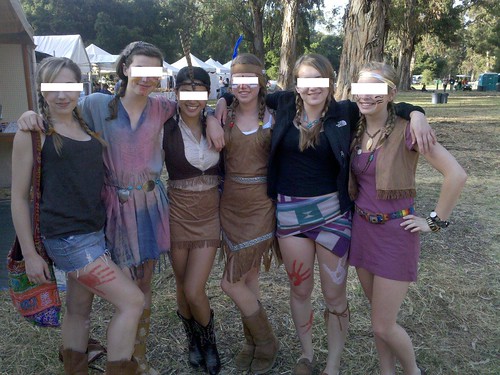
secondly, the debate about cultural appropriation, specifically in relation to native stereotypes, rages on. thankfully, this debate is spreading like wildfire across the internet, and discussions are starting to arise about what actions need to be taken.
  • my culture is not a trend is really on fire, and a great resource for anyone interested in the topic. i really have to resist the urge to reblog every single one of their posts on tumblr! so good, so honest.
  • published in january of 2009 (so way before this firestorm of online discussion really took off, which i would say was the spring of this year), see light outlines how to define and identity cultural appropriation. it's been making the rounds on tumblr and i thought some of you might be interested in checking it out.
  • the comments on threadbared in response to the above pixie market advertisment are also amazing, as we have come to expect, appreciate and adore. all of these spaces we've carved out in the internet give me hope that we can bridge the gap between discussing the theoretical problems around cultural appropriation and the actions we can take to voice our opposition and encourage critical thinking around issues of "post"-colonialism in the fashion industry.
moving on!


along the same questions of "appropriation," we have this really well written and thought-provoking piece about the politics of the term genderqueer: questioning transphobia: appropriation of genderqueer identities. it is a very informative piece, definitely worth a read.

to end off our link sharing, here are two that the wonderful iris shared with me this week + an email tip-off:
last but not least, today is my little sister jasmine's birthday. so i thought i would take this opportunity to share the amazingness that is my relationship with my sisters with the internet, with the help of a few absurd photos:


jasmine being a supermodel for my etsy store

and of course, the trio:


justyne (the eldest), yours truly (middle child syndrome right here) and jasmine (the baby)
photo by simon dumas


christmas 2008 (yes those dresses were a joke)

now, to go rest my throbbing, aching head. hopefully this post was coherent!
goodnight!

Tuesday, June 8, 2010

Love Letters and Cultural Appropriation: Gala Darling

i'm very excited to present my first guest contributor, and long-time super awesome friend, iris . she's currently completing her masters in philosophy. her research focusses on connecting disability theory to feminist philosophical frameworks. in her free time, she volunteers at Out on the Shelf, OOTS, a queer bookstore in Guelph, Ontario, drinks lots of tea, and longs for folks to have dance parties with.
Fashion blogger extraordinaire Gala Darling knows a thing about creating a signature style: in some parts of the Internet, her cotton-candy hairstyle, positivity-inducing attitude, and recovering-Goth-meets-Sex-and-the-City outfit posts make her an icon. And Darling makes her money precisely because she is so fabulous: readers of her blog shell out extra cash for installments of her e-book, which promises to teach her acolytes the secrets to attaining her magical, glitter-infused lifestyle for themselves.
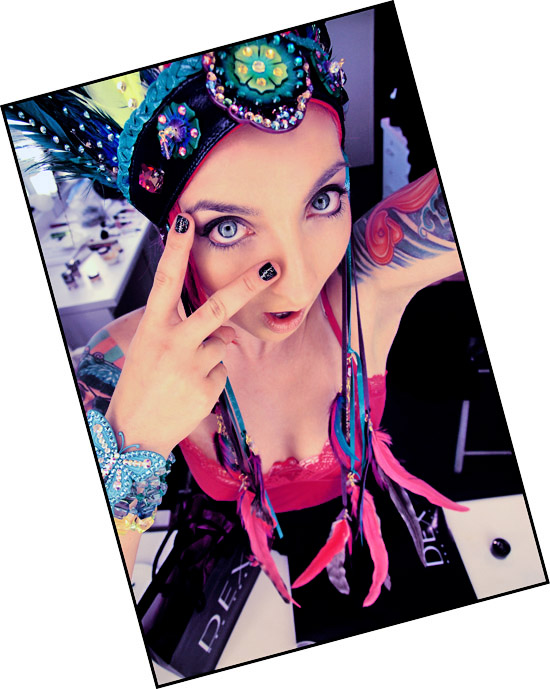
Gala Darling is so into personal branding that she has a signature signature: she signs off her posts, “Love Letters and Feather Headdresses, Gala xx”.


Yep, feather headdresses. Gala has been a fan of this hipster-hyped accessory for the latest year or so. Every post, she wishes her reader “feather headdresses” as her parting words. I couldn’t believe what I was reading, but after months of this, when it finally sunk in that, indeed, she was doing it on purpose, and she wasn’t going to realize that this was Classic Cultural Appropriation Fail, I left a comment on her blog asking what was up with the phrase.

Gala’s response was even more cringe-inducing:
So many things I love are from cultures foreign to my own (hip hop, Indian music, Buddhist concepts, etc.), should I ignore those things because I’m a white girl from New Zealand? My life would be much less fabulous if I did! I absolutely believe that culture is something to be shared, delighted in, learned about & cherished…
Rather than engage with the many reasons that Indigenous peoples might not want to have affluent white women wearing their traditional regalia, Darling speaks to the reasons that her own, very privileged lifestyle would lose some of its lustre if she felt she needed to limit her style choices to things that come solely from her own culture.

In doing so, she basically justifies her use of the headdress as part of her own personal branding by saying that it benefits her to do so. And since Darling bases her income on selling the desirability of her own fabulous lifestyle, and in influencing other young women to find that lifestyle desirable, she is literally appropriating Indigenous culture to benefit her own bottom line.

Last week, in a post promoting the latest instalment of her book, Darling describes the transmission of the electronic copies as “whizzing around our heads right now, landing with a splash in the inboxes of international playgirls, glamorous savages & doll-faced geniuses all over the world!” (emphasis mine).

We know that Darling thinks that (at least some) “savages” are glamorous, as we can see from the style inspiration on her blog. But now, she has portrayed herself as selling her own fashion-forward, magical lifestyle back to the folks she stole it from in the first place. I left an admittedly-frustrated comment on her post calling her out on her language, and so did a few other folks I know, but they have all been deleted.


Back on that original post in February, I responded that the problem with cultural appropriation, as I saw it, is that Indigenous folks face discrimination and in some cases have a history of being legally barred from wearing things like headdresses. The hipster headdress is perceived by others as being “fierce” or “exotic” or “creative” or “bohemian” at the same time that Indigenous people who might want to dress similarly would be perceived negatively for doing so. I said that when you are a person who has not invested any time in understanding the widespread racism that Indigenous people and communities face, or the continuing effects of colonialism on those communities, it is especially insensitive and can be straight-up racist to align yourself with those communities by taking something you think is fashionable and using it to make yourself look cool. I asked Gala to think about how “you are taking from that culture and giving nothing back, not even your constructive support.”

But this most recent comment about “savages” shows that, obviously, she hasn’t thought about it. And the fact that Darling is deleting comments that call her out means that she isn’t willing to publicly discuss it, either.

And that’s bullshit. It is time for Darling to have to publicly discuss her Cultural Appropriation beyond a pithy comment about her fabulous lifestyle. And it is time for her to be asked to answer to similar criticisms being made by other bloggers. Why does her blog depict mainly white women? Why, when she talks so much about self-love and body acceptance, does she post photos of thin women almost exclusively?

I love a good fashion blog. I love talking about outfits. But we have no business allowing the representatives of the fashion blog community to be oppressive. Gala Darling needs to be called out. And we need to step up and do it.

There are lots of resources out there already that talk about cultural appropriation and the hipster headdress. Namely, this post at the Cultural Appropriations blog called “But Why Can’t I Wear a Hipster Headdress?”

There are lotsa reasons why, of course, including this one:
By the sheer fact that you live in the United States you are benefiting from the history of genocide and continued colonialism of Native peoples. That land you're standing on? Indian land. Taken illegally so your ancestor who came to the US could buy it and live off it, gaining valuable capital (both monetary and cultural) that passed down through the generations to you. Have I benefited as well, given I was raised in a white, suburban community? yes. absolutely. but by dismissing and minimizing the continued subordination and oppression of Natives in the US by donning your headdress, you are contributing to the culture of power that continues the cycle today.

Two years ago now, Jessica Yee wrote a post about Juliette Lewis’s hipster-headdress appropriation:
But it’s not like this all isn’t a usual occurrence. We in the Native community have to witness this with every kid who dresses up like Pocahontas on Halloween, or every time we turn on the TV to watch the Redskins, Braves, or Indians play. In fact it’s been going on for so damn long that we’re kinda the only race who it’s still happening to on this extreme, public level, to the point where the fight has basically died down. Or has it?
What I find most interesting though about all this imagery, and in particular Lewis’s choice of dress with her band, is actually coming from my raging feminist point of view. In an attempt to appear strong, raw, and unapologetic, people, and in this case, a woman, feels like she has to appropriate Native culture to a pretty extreme extent in order to do a good job of it.