Wednesday, February 24, 2010

an "aboriginal friendly" canadian winter olympics: inclusion, tokenism and cultural appropriation

the olympics are almost wrapping up, thank goodness, because they are grating on my nerves more than ever. i've talked about it elsewhere how i really need to take a break from facebook because as much connection as it can offer me with faraway loved ones, it also fills me with violent urges thanks to the newsfeed. lately the status updates have been getting to me: everyone congratulating olympic athletes as if they are on a first name basis with them, as if another gold medal really means anything for "canada" or whichever country you belong to and are proud of because it produced good athletes. is that what people want to believe the olympics are really about? athletic performance, point finale? don't think so.

part of my reluctance to write about this is that i know the common reaction is that i'm an uppity lefty who just likes to tear down anything fun. "it's just sports! don't take it so seriously!" but then i realized that that is the main reason why i started this blog; in reaction to those who constantly say "it's just clothing! don't take it so seriously!" so read on at your own risk: i am going to try and make you hate the olympics.

okay, i'm sorry, i'm grumpy. let me begin by saying that there are many, many reasons why the olympics piss me off, but namely what has really been aggravating me these days is what is getting talked about and what isn't. i normally listen to cbc radio quite often, but my radio's been turned off almost constantly for the past week and a half. the only decent mainstream news reporting i heard was on the current when anna maria tremonti talked about what a post-olympics vancouver might look like. click the link to listen for yourself.

i tried to find a way to write about the olympics that i felt would suit the feminist fashion stance of this blog way back in october, but never ended up finishing it. today, triggered by a great article entitled "an indigenous olympics" by toban black my friend iris showed me, i'll just put it out there for you. it originally felt unfinished and disjointed, more of a rant than a cohesive essay of sorts, but i think if you read black's article first, it will put you in the right mindset to see where i am coming from. without further ado,

an "aboriginal friendly" canadian winter olympics: inclusion, tokenism and cultural appropriation

The first time I wrote about cultural appropriation and fashion was in 2005, when mocassin-style boots were appearing as a major trend for winter footwear. I wish I could dig up that article, but it seems to be lost somewhere in the archives of the newspaper I wrote it for. I wish I could find it since it would be a good starting point for what I think will be a recurring topic on this blog, as it is something of a touchy subject within the fashion community.
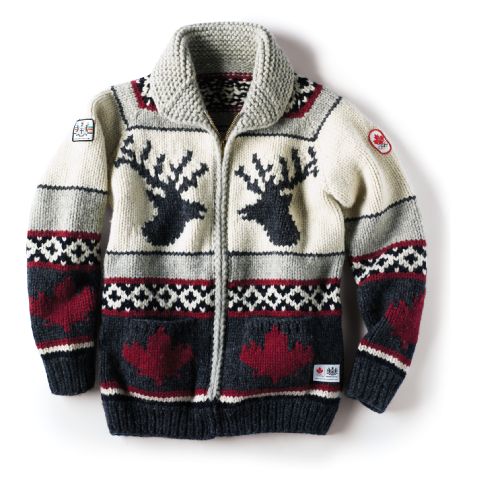


Unveiled earlier this month (October 2009), the Hudson Bay Company's 2010 Olympic clothing line is coming under criticism from Cowichan tribes who accuse them of producing "knock-offs" of the genuine Cowichan sweater.

According to Coast Salish artist Joe Jack, the Cowichan sweater emerged thousands of years ago as a way to battle the harshness of the North American coastal winters. The Coast Salish women had established a strong tradition of weaving woolen and cedar clothing for their families.


"Pre-European, and primarily before the easy access to domestic sheep wool, the Salish women wove clothing and blankets using the hair of a now extinct breed of small wool dog, mixed with mainland mountain goat wool, and goose down."
Over time, starting largely in the 1860s due to the extinction of the small wool dog, the style evolved into what we commonly know today as the Cowichan sweater. Practical and beautiful, the garment itself shows an incredible amount of skill and talent. Today, however, the Hudson's Bay Company is attempting to appropriate this rich cultural history of this garment and make a profit of it, with none of the proceeds going to the Coast Salish people it is appropriated from.

This is a perfect example of one of Black's points in his article; Black argues that the image that the Olympics present of the Native community is one that is muddled and watered-down. Yes, it is including native people in its clothing wear by borrowing from the cultural history and traditions, but it needs to do more than that. Who will be making these sweaters? Who will profit from them? And who will be able to afford to buy them and wear them?
Passing theatrical gestures to native peoples during the open ceremonies could be considered to be more respectful, but Olympics marketers otherwise have been mixing up North American native traditions into a soup-like caricature.
Theatrical gestures is right. Like Black says, by simply addressing the fact that the logo of the Vancouver Winter Olympics is from northern, Inuit communities while the games take place in a temperate climate where those people never lived shows us that this is tokenism. And let's not even touch the fact that most of the designs for the games that are "native inspired" weren't even done by First Nations artists!

It seems more and more like the "inclusion" of Native communities and organizations in the Vancouver Winter Olympics is nothing more than tokenism or branding. In this case the situation is pretty clear: Yes, we want to sell sweaters that look as though they were made by Native people, but we won't get Native people to make them or let them profit from them.

Often, people dismiss claims of cultural appropriation as trivial and unimportant; "there are bigger problems to address here" or "relax, it's just clothing" are the most common responses I've encountered. However, the cultural appropriation in and of itself does not exist in a vacuum. In this situation, I would argue that the attempted cultural appropriation of the Cowichan sweaters is indicative of larger, more important systems of oppression that are at work. The fact that the Vancouver Olympics Committee thinks it would be okay to take something that is specific to the Coast Salish people, find people who could make it cheaper, and sell it for more money illustrates very clearly that VANOC has very little respect for the host nations it claims to be working with.

WHY THE OLYMPICS ALREADY SUCK


For most people, it is not surprising that the style choices made by HBC and the VanOc comittee are controversial ones; ever since Vancouver won the games in 2002, nearly every decision that has been made (various censorship issues, the debate around female skiers, the Sea to Sky highway, development that displaces the homeless, the Native communities who are against hosting the Olympics on stolen land, the increasing corporate sponsorship, to name a few) has resulted in public outcry.

In my post-colonial theory class two years ago, we discussed the problematic nature of the mascots which are awkward mishmashes of various traditional Native mythological creatures: a half-whale half-bear hybrid (Miga), a whale-thunderbird-bear hybrid (Sumi), and a sasquatch (Quatchi). None of these characters are taken directly from First Nations people. Rather, a designer just threw a bunch together and this is what we are left with.


But back to the Cowichan sweaters. At this point, it almost seems like they are trying to piss off as many people as possible in as many different ways they can think up. Of course, even the clothing they chose for the Olympics would have to be controversial as well. (For more information about why so many people are opposed to the Vancouver 2010 Olympics, check out No2010.ca)

How ironic that it is the Hudson Bay Company who is responsible for the appropriation of the Cowichan sweater. A brief brief primer for those of you who aren't Canadian: the Hudson Bay Company was established in the 1600s, when French and English colonizers/settlers arrived in Canada, or what was soon to be established as Upper and Lower Canada (today, the provinces of Ontario and Québec, with a little bit of power in the Maritime provinces). The Hudson Bay Company established formal fur trade between the trappers, who were often Métis (French and Native American mixed-blood) who hunted animals in difficult to access areas and sold the pelts back to the HBC who would use them to keep the colonizers warm in the harsh climate. There is a much longer history but that's just a brief bit of context for you.

For some more good 'ol fashioned racism courtesy of the Hudson's Bay Company, watch (and cringe) at this commercial.


It is so easy to deconstruct as this idea that white people arrived to this uninhabited land and worked hard and conquered it. We see a glimpse for maybe two seconds at the beginning of the commercial of native people with the Cowichan sweaters hanging; it seems as thought it was shown more for product placement than an acknowledgement of the fact that Native people were here first. All we see are these white pioneer men conquering the empty land and "thriving" in the elements... but that's a whole blog post to itself if I go on.

To end, then, my point is namely that like with any international event that puts a country's history on stage, we have to be critical of what we are being presented with. We have to ask questions that dig deeper. Who is being talked about, and who isn't? What happens before and after said event?

In response to the public outcry around the Cowichan sweaters, the HBC released a statement saying that the hand-knit sweater is a "nod towards this icon of Canadian fashion, while adding our own contemporary twists including type of wool, colour, pattern complexity and logos." Basically, to me, this reads as "We like the look and style of your sweater, so we are going to steal the basic idea of it, get white people to make it even though your ancestors are the ones who created this style of sweater, get them to make it for cheaper and sell it for more money. Oh yeah, and you won't get any money out of it either."

This is my main point of contention with a lot of fashion items, accessories and styles that have a deep cultural history. The idea that one culture can potentially claim "ownership" and can then be stolen from is a very large debate and one that cannot be fully taken up here. But, in this case, I feel like the official Olympic line of clothing is indicative of much larger problems that unfortunately aren't being talked about.

If you're interested in more writing on the topic of cultural appropriation in the Vancouver Winter Olympics, i highly recommend checking out the Urban Native Girl's blog as well as Racialicious.com. for more discussions about feminism and the olympics, check out the pursuit of harpyness. Thanks for reading.

Sources: Cowichan fakes won't win gold from the Victoria Times Colonist

Olympic sweater not a Cowichan, Hudson's Bay Company says by Bruce Constantineau

The history and artistry of the Coast Salish Indian Knitting by Joe Jack.

Podcast of the Cost of the games for Aboriginal communities by Anna Maria Tremonti.

Podcast of the Olympics and Civil Liberties on the Current

The Olympic Resistance Network

Tuesday, February 9, 2010

currently:


there are so many things i have been trying to find the time to write about, but for now they are relegated to point form scrawls in my dilapidated moleskin. but the things that are most relevant to you, my dear readers, is the fact that i recently attended some conferences at la musée des beaux arts de québec about the connections between art and fashion. there are two more conferences in the next month and i am quite excited for them and will share pictures, thoughts and quotes when it is all said and done.

also, i recently starting working at a used bookstore and have been finding treasure after treasure. we often have to throw out old tattered books that are more often than not out of print and i have been taking the precious ones home with me. i will share the best ones with you soon!

but for now you can keep up with the images i love on tumblr.


currently reading:

the language of fashion by roland barthes
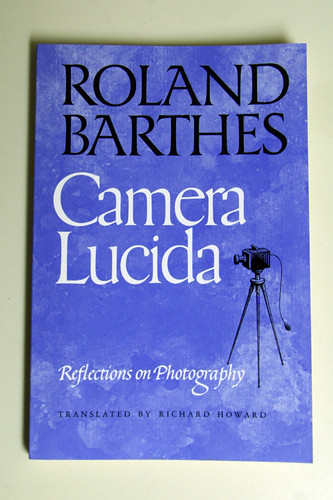
camera lucida by roland barthes
the fashion book, published by phaidon
souffrir pour être belle edited by jean yves collette and pauline hamel
debut: yves saint laurent 1962 by laurence benaim
lorsque j'étais une oeuvre d'art by erik-emmanuel schmitt


currently listening to:
ebony bones
the breeders - last splash (1993)
justin hinds and the dominoes
miriam makeba & the skylarks
tuneyards
jeffrey lewis
cbc radio's wachtel on the arts


"Did I ever tell ya that this here jacket represents a symbol of my individuality, and my belief in personal freedom?"

currently watching:
wild at heart (david lynch, 1990)
a serious man (coen brothers, 2009)
fargo (coen brothers, 1996)
volver (almodovar, 2008)
whip it (barrymore, 2009)
tabou: zohre & manouchehr (mitra farahani, 2003)

Monday, January 18, 2010

winter's a drag


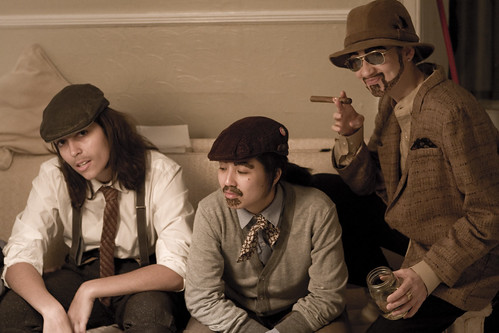
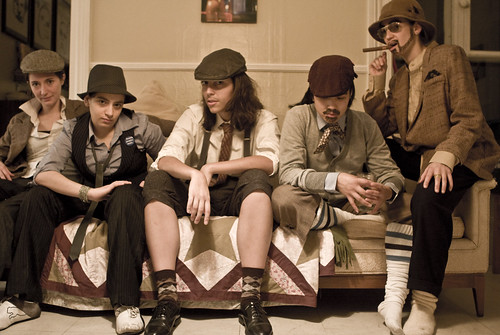
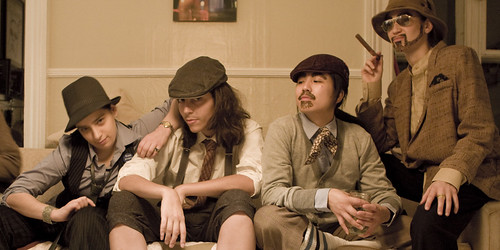
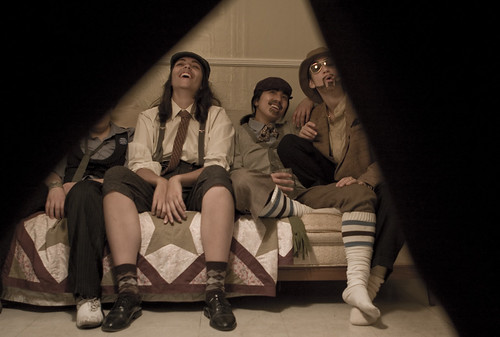
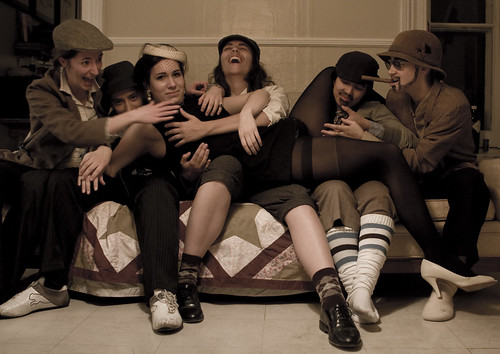
on saturday evening, i threw a drag themed belated birthday party at my house entitled "winter's a drag." i'm really trying to start this winter off on a good note, and face it with positive energy instead of "wah wah it's cold and winter and long and dead" attitude that i normally have. warm boots, good coats, nice hats, and most of all, affection from friends. movie watching, activist organizing, dance parties and warming our bodies with the wonderful exilir known as booze. i did all of the above this weekend, but the highlight by far was doing drag with some of my great friends. for many of them, it was their first time doing drag! i was very impressed.

the inspiration for my ensemble was my very favourite silent film chap, buster keaton. i threw my outfit together thanks to the thrift store i work at and some old suspenders i had never gotten around to wearing. so while i was looking at this picture for inspiration, i was trying to tuck my hair under hat to pass for a short haired chap. this has never, ever been a problem for me doing drag before, as i've always had a bob at longest or short hair. frustrated, i take all the bobby pins out and let my hair fall.

as i look in the mirror, my jaw drops.


i'm sam from benny and joon!

which, if you've never seen the film, is ironic in itself since sam (johnny depp's character in the film) is an eccentric young man who models himself after buster keaton! so i decide to roll with it, even if it means i look more like a woman dressed as a man that as a full-fledged drag king.


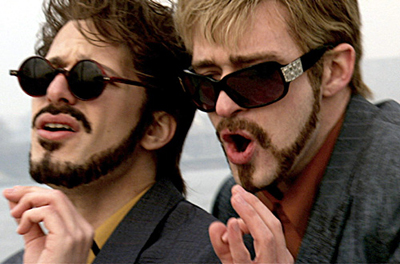
but my friends, on the other hand! they were impressive. here we have aj, inspired by aj from the backstreet boys of course, but also a dash of justin timberlake a la "dick in a box."


yeah, you can totally see it, can't you?

here are a few more for your enjoyment:
sam, lee and aj

our boy band shot

off the shoulder

favourite point of view

dance for us

admiring the female form

it was a really lovely night and i feel pretty lucky to know all these great people.

this was the 6th or 7th time i've done full-on drag. the last time was in toronto, just before i moved to québec city, at the wonderful COLOUR ME DRAGG. it was a really wonderful event to showcase qpoc performers and i think it has been redone since! i tried to go as a greaser type character but it didn't really work out. i think my friend morgan has better photos but for the time being:


i'm the one with the beer in my hand and the other one covering my mouth, scandalized!

i helped organize and participated in drag shows in peterborough, ontario, and aside from my very first one, always went with my queer friends. on saturday, in québec city, i'm pretty sure nearly everyone at the party identified as straight, which made for an interesting atmosphere in itself. at first it was really hard adjusting to having left the queer communities i had found and felt at home in in ontario, but now that i feel comfortable enough with a lot of my newer friends i feel like i can do things like throw a drag party and everyone will have a great time.

there are a lot of ideas i'd like to unpack about drag; namely, this idea of feeling "at home" in a certain kind of clothing. there were a lot of discussions around ideas of comfort, like "i feel comfortable wearing a dress, but not makeup" or "sure, i'll put makeup on, but there's no way i'm putting on a dress." anne-marie, who dressed as a holly golightly inspired drag queen, wasn't even comfortable walking half a block in the hat and heels she was wearing. two female friends who took a cab to my house were called "monsieur" by the cab driver and corrected him, and we talked a bit about if we would feel "comfortable" walking around late on a saturday night in drag. where does the line between comfort and safety blur? or are they parallel lines that simply follow the same path?

we all have our own ideas of our personal sense of style and how we want to present ourselves, but when it comes to gender bending we have to confront ourselves with questions of our own choices and influences. why do we feel more comfortable in item x, and incredibly uncomfortable in item y? what wouldn't we ever wear, and why? is it our own embodied comfort, the actual physicality of it, or is it how we think others might see, or read us? and of course, is it simply a combination of both.

clearly i haven't quite fleshed out these ideas yet, but they are occupying my mind and i think the more i do drag the more i'll work them out.

i'd really like to start using flickr again, but i don't have a paid account. but feel free to add me as a contact, as with any luck i will be rolling in the dough soon. see all the photos from the set here.

last but not least, i recently made a mix of the songs i couldn't stop listening to in 2009. click here to download it if you'd like to hear it! i've shared it everywhere else, so why not here?

thanks for reading!

Thursday, January 14, 2010

rescuing garments and the history of clothes

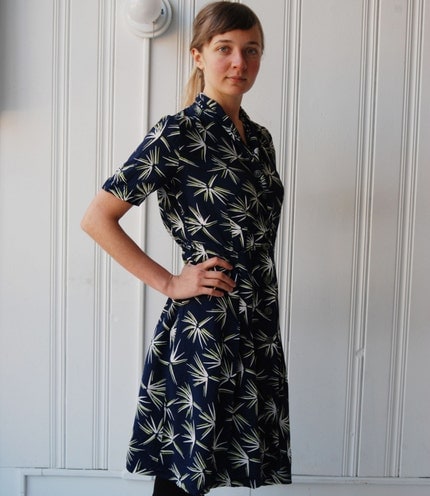
lately i've been stumbling upon a lot of amazing artists i would like to share with you, but have been overwhelmed with where to begin! but let's get things rolling with something that triggered a lot of thoughts in my head last night. yesterday lisa had posted a picture of a dress on tumblr and all i could read was "50s Fireworks silk dress rescued from an abandoned by plundered." rescued from an abandoned by plundered? clearly my interest was piqued, by the lack of logic at the ending of the sentence, but also because whoever who refers to a dress as "rescued" seemed like my kind of person, and so i clicked on the link.


what i found was a description of a beautiful scene:
I love this dress. I found it many years ago at an abandoned house. It has been washed. This house was so amazing. There were brassieres and dresses and photographs and even a dark room and tin types. There were christmas cards - one with 3 dollars in it - and unspent bonds. Walkie talkies and tinsel and letters from the WWII and photographs of dogs - The Rementer Pointer. Oh, I miss, I miss the days of abandoned housing. With a little Søren, well, I just haven't.

This little number belonged to Flossy Rementer. I haven't updated this site in ages so I hesitate to post this, but will... www.theblackspotbooks.com on the front page are 2 photographs of Flossie. She was beautiful.

dumbstruck! how magnificent; not only is it a pretty dress, but the person selling it tells you this wonderful story to go along with it. it reeks of nostalgia and affection, and the kind of story you wouldn't forget if you are the one who buys this dress. knowing that this dress could have so easily been lost forever, eaten by moths in an abandoned house somewhere in the world, but instead here it is! on your body. and you're adding to the story with whatever you do with the dress! if you wear it out dancing, if you spill cheap wine on it, if you give it to someone else one day. you even know the name of the woman who wore it, and most likely purchased it. isn't that amazing?

just today i was thrifting and looking at old fur coats, and loved seeing "florence" embroidered on the inside of a big bulky grey fur coat. wondered how tall florence was, if she was still alive, if she wore this coat often or simply on special occassions. where had she been in it? what had she done? what did she look like? if only there was a picture forgotten in one of the pockets... usually, i cannot afford to purchase dresses or hats or things i find that have accompanying pictures of the former owners; this normally happens at high end antique stores or vintage fairs. on top of that, the chances that the item will fit is a whole other can of worms!

the one thing that surprised me with this story and with this rescued dress is the price: $42. a more than reasonable price for a 1950s day dress, especially one in great condition this comes back to a point i have struggled with since beginning to price my things on etsy. i often feel like i am selling more than a simple garment; i am selling you the history that goes along with the dress.


the first dress i sold on etsy, i had purchased at a vintage clothing fair, had only worn once or twice because it was far too small for me and i simply did not want to admit it until i busted a seam. it ended up being resold on ebay for an astronomical markup ($325, and i had sold it to her for $60), and i was quite crushed about it. i told myself i was selling vintage clothes because i had too many of them, and there was no sense in having things that didn't fit me stagnating and taking up space in my closet. it wasn't so much that this person made so much more money off of what had once been my dress, it was a number of things. i always try to price my things reasonably because i do not adhere to or like the idea that you have to have money to be stylish and have nice clothing. yet here this person was, re-selling a dress she had purchased from a girl who in her wildest dreams would not and could not spend $325 on a piece of clothing.

these ideas bring me a to a question i've asked myself time and time again: how do we value vintage? in my eyes, this rescued fireworks dress is worth far more than the $42 dollars being asked for. because we know it used to belong to flossie, because it has been cared for, because we know it so easily could be lost forever. because it almost feels more like a historical artifact that a piece of clothing that could be discarded. but! that is me. (and i am someone who can't even afford to spend $42 on a dress, let alone more.) i'm also the kind of person who would rather sell dresses for the same prices i've paid for them or a bit more, and most likely why i'm still poor. i wander into vintage clothing stores and gasp at their overpriced tags, and walk away from vintage clothing fairs empty handed because i'm simply not willing to shell out the cash for their goods that are far too similar to the ones i find in thrift stores for a few dollars, not hundreds.

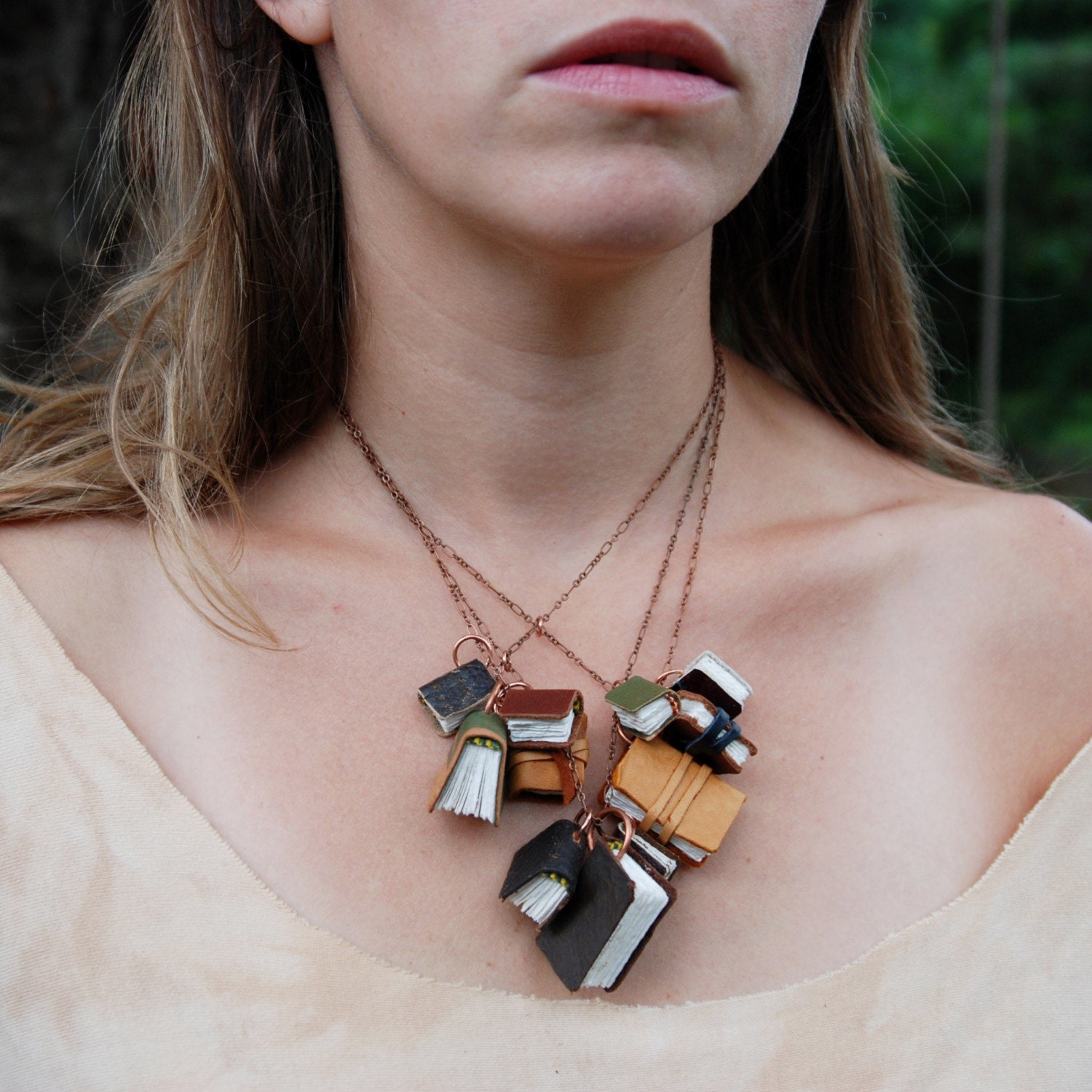
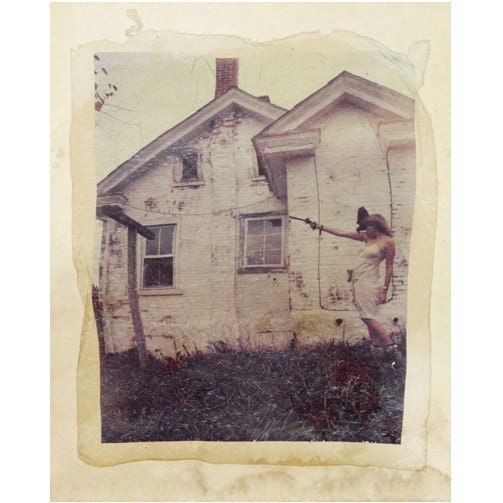
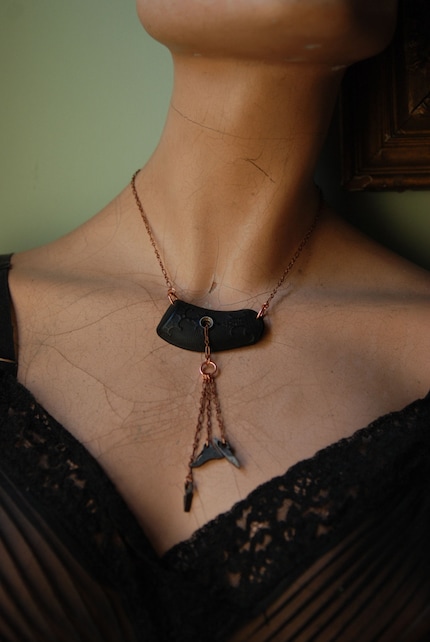
not very surprising, the woman selling this dress, margaux, is a very interesting artist who does more than simply scour abandoned houses and sell the vintage dresses she finds in them. in her other etsy store, the black spot books, she sells jewelry, books and art that simply put, drips with creativity and histories. i'd seen images of her "library" necklaces before, and was not surprised to find that i want nearly everything in her store. here are some of my favourites:


The Fall and The Gathering of The Leaves III


some of marguerite's books


a necklace made with parts of an old gun! genius.


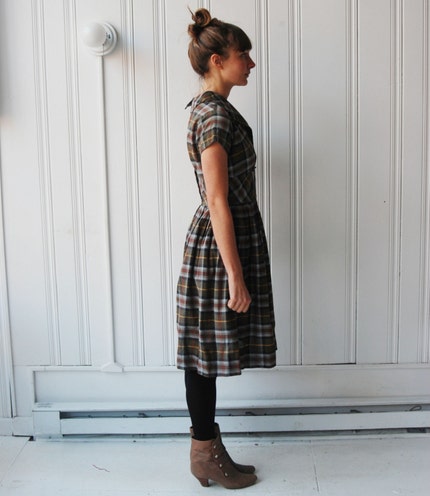
1950s autumnal plaid cotton day dress

so, without further ado, so and visit all the links i just provided you with! i think you would all enjoy checking out her stores as much as i did.

Monday, January 11, 2010

dead man's bones


still trying to finish up my "best of" the year/decade lists, and stumbled upon this video i hadn't watched since the spring. love it even more now than i did the first time i watched it.

also: style motto for 2010? more drag, more often.

Wednesday, January 6, 2010

on self-portraits and shaming

one of the things i set out to do with this blog when i started it was to examine self-portraits and their prevalance in fashion blogs and feminist art that is out there on the internet right now, as well as share some of my favourite people on the internet with you. and i haven't done that yet! so today, you get two for the price of one.

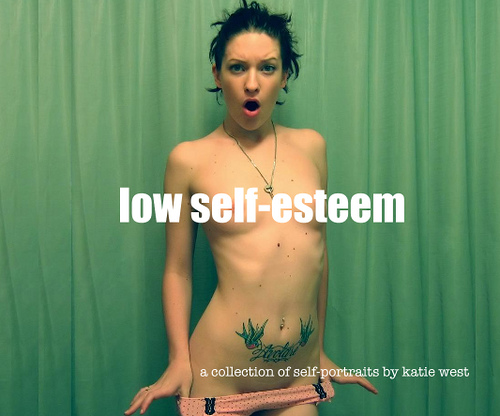
one of my favourite photographers, whose work is almost entirely composed of self-portraits, is katie west. she recently posted some really interesting thoughts on her blog which i really think are worth reading and thinking about, but before i share that with you i wanted to show you some of my favourite of her photographs.


marooned


cat lady


laundry


fun by myself

i've been following katie's work on the internet since her days on livejournal, maybe all the way back in 2005? yes, i liked her pictures, but i've always liked the way she writes, the way she articulates her ideas, and the way she still seems mysterious even though she's shown you naked pictures of her body in dozens of different positions. the way she writes about love, about sex, about loss all let you know there is a very sharp critical mind inside that pretty head, even if it is a very pretty head and we are trained to think that pretty heads are more often than not empty ones. and the post she wrote that i want to share with you has reminded me of that.

on top of being a great writer, being incredibly sexy and talented, she also has an awesome sense of humour.

you see, the thing is, if you're a young woman who puts naked pictures of herself up on the internet (regardless of their original intention) you will get detractors, critics, haters and my least favourite, shamers. this does not matter if you are conventionally attractive or not, if you fit into categories of acceptable or unacceptable. women's bodies will be criticized (yes, certainly, some more than others, and in more oppressive ways) and that is the way it (it being.. patriarchy? capitalism? both?) works. katie west decided to take this in stride, and titled her first book "low self-esteem" in response to the common idea that if a woman wants to take naked pictures of herself and put them up on the internet, she must have "issues" and have low self-esteem. how many times have women been shamed about their sexuality, about their bodies, and about their desires by being told that they are the ones who have a problem, not the other way around? i can't even count, myself.


brilliant, no?

but enough about what i have to say. the reason i'm telling you about katie is that she's said some really interesting things about how self-portraits and especially how erotic self-portraits done by women are judged, and the responses to her have been really inspiring. from her post entitled "sometimes:"
...sometimes I get discouraged that these things are making me think I have to answer to someone for what I do. I found something a woman wrote about me today that said

the real katie west bent over is not in a position of power. it is one of submission. it invites the internet to fuck her without seeing her face. (this position is fine for lovers who respect each other, but for strangers it suggests worse things. how easy is it to jam her face into the wall rather than a soft pillow? to put a hand over her mouth?)

katie west, you are not a positive role model for women, so please stop pretending to be. put an XXX on your page, sell-out the good old fashioned american way. but don’t for a second make me think that your emaciated body and self indulgent photography is supposed to EMPOWER me. i can pick up any men’s magazine that comes in a black bag and get that same empowerment. just because you take the photograph yourself doesn’t mean you are in control, it means you are perpetuating the lack for free. you are building the cage around you.

It said some other stuff too. I believe the woman who wrote this, deleted it, as when I tried to click back to the source, the page couldn’t be found.

...I believe in what I do. And it is usually a constant struggle to maintain this faith, as often I’m faced with the types of accusations the woman brings up in her post. And I question my motives, and how I go about everything I do, make myself shake with nervousness and worry, but always come to the same realization: I believe in what I do. I believe that what I do is take honest pictures and write honest writings. If someone finds them pornographic, it can’t be helped. No one pressures me to take my clothes off, no one is paying me to do it, no one is telling me they’ll like me better if I do. I do it, because being sexual, being erotic, it’s just part of me. The photo I believe she’s referring to is one taken in a hotel room in Minneapolis, where I captured myself missing a lover, strange that she should mention lovers then, no? And she’s right I do create an act of submission by posting my pictures on the internet; I submit to people who look at them and say, “here, this is it.” And I know people, mostly women, appreciate that because I get emails telling me so. The vast majority of all the emails I get from strangers on the internet are from appreciative women, so how can I not believe in what I do?

you can read the entire post here, and i encourage you to. but this is what i love about the post; west is really speaking to the power of self-portraits as a way of exploring your own identity and that is something i feel a lot of people don't really get. and she addresses that in a sense as well; people are free to take away whatever they want from her photography, and that is part of the power in it. i can impose my own stories into her photographs, just as anyone else is free to. i can fantasize. how much power does the creator of that image have? is it more or less than the power that the viewer has? that is part of the interesting nature of self-portraits and something i really want to learn more about. it started the first time i saw a cindy sherman untitled film still, and my interest has not waned since.

in my experience with self-portraits, i never want people i know to see them. i am embarrassed at the idea of someone thinking any number of reasons as to why i put the self-timer on and take photos of myself. you are letting your guard down by showing them to strangers, to people you know, by having them easily accessible to anyone. personally, i take self-portraits for dozens of reasons, some admittedly more interesting than others: boredom, using the digital camera as a full-length mirror, to see how others might see me, to try to capture a moment, a place, somewhere i have never been and will never be again. this can be physically or emotionally or what may have you. most of these, i never share with anyone.

one last thing about what katie west has to say:
And yeah, my photography is self-indulgent; I take it for myself. I don’t take it to empower anyone else, I take it to empower me. I do it because it makes me happy.
amen, sister. at the end of the day, that's what i love about her photography and about her writing, that's it's so clearly for herself and not for me. that i am lucky that she has chosen to share it with me, and that she could take it away if she wanted to. that's powerful enough in itself, even without her badass posturing, eye for amazing natural light and her straight-up talent. if anonymous people on the internet want to keep writing things about her in an attempt to silence, she will show them otherwise, and i am glad it only reinforces my admiration for her. thank goodness for people like katie west.

edited to add: after having spent a good two hours writing this, i notice that laurie penny has already written a much more articular and well-written piece. her blog is fucking amazing and i am glad to have found it and just read that.

Monday, December 21, 2009

top ten films of the decade you (probably) haven't seen

okay, so i know this is my feminist fashion blog, but since i put a lot of time and thought into this i thought i'd share it here as well. you can read a bit about each one of them by clicking on the title, and feel free to comment here or on tumblr. this list should not be confused with a "best of!" they are just my personal favourites that i think are criminally underrated. when i started writing my favourites of the decade, i realized they were all already films people knew and loved as well (the royal tenenbaums, amélie, cliché, cliché, cliché) so this one was a bit more fun and creative to make.

julia's top ten films of the decade you (probably) haven't seen

10. battle in heaven (carlos reygadas, 200)
9. the visitor (thomas mccarthy, 2007)
8. polytechnique (denis villeneuve, 2009)
7. house of sand (andrucha waddington, 2005)
6. atarnajuat: the fast runner (zachariah kunik, 2001)
5. the edge of heaven (fatih akin, 2007)
4. wet hot american summer (david wain, 2001)
3. palindromes (todd solondz, 2004)
2. red road (andrea arnold, 2006)
1. xxy (lucia puenzo, 2007)